🎧 Listen to this article
You’ve been told depression is a chemical imbalance. Low serotonin, take a pill, fix the problem. But what if the fire starting in your gut is what’s actually burning down your mood?
What’s actually happening
The chemical imbalance theory has been falling apart for years. When researchers artificially lower serotonin in healthy people, it doesn’t produce depression. Only about 25% of depressed patients actually have low neurotransmitter levels. Some people with zero history of depression have rock-bottom serotonin.
What does reliably correlate with depression? Inflammation. Specifically, inflammatory cytokines — signaling molecules your immune system produces. A paper in Journal of Affective Disorders found that administering endotoxins that provoke inflammation to healthy volunteers triggers classic depressive symptoms (Miller et al., 2009). About a quarter of patients taking interferon (a hepatitis C drug that causes significant inflammation) developed major depression during treatment.
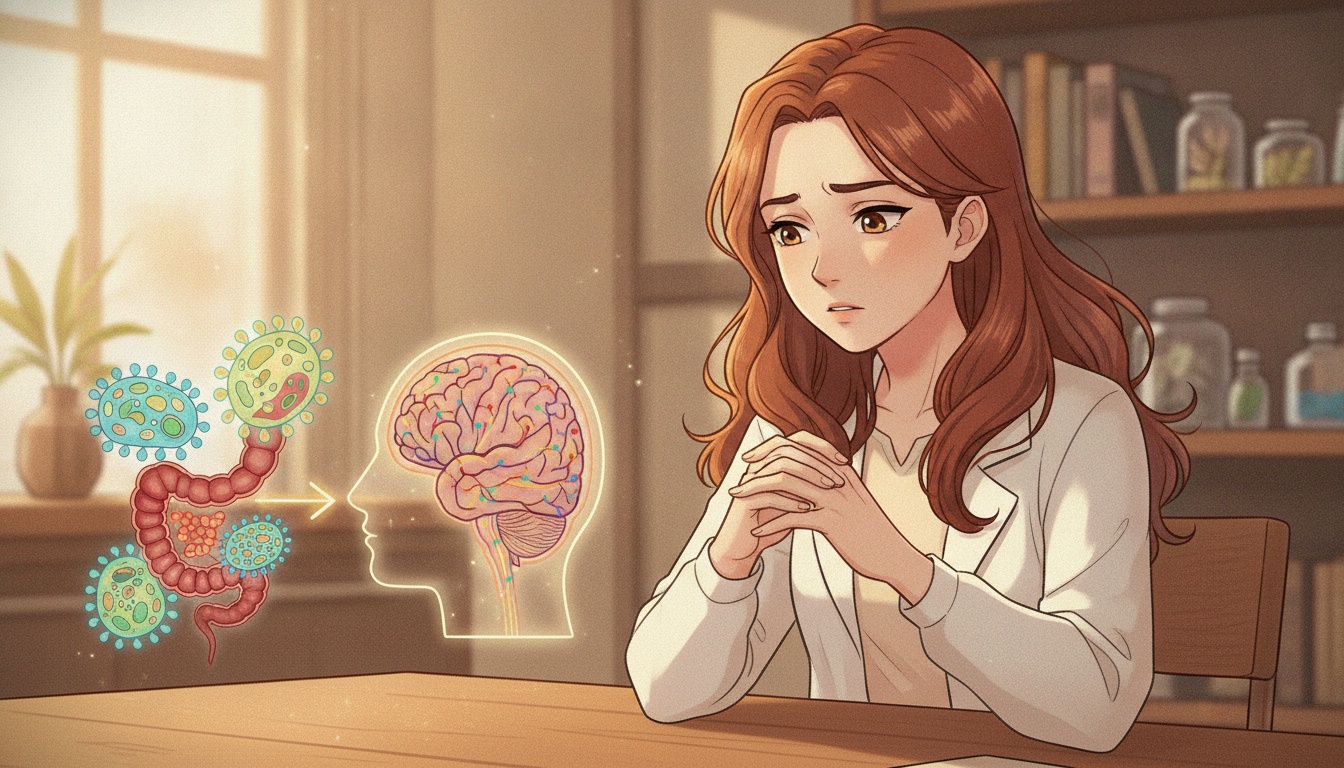
This is the immune-cytokine model of depression: depression isn’t a disease itself, but a sign of chronic immune system activation. And for most people, that inflammation starts in the gut.
Your gut barrier is supposed to be tight — keeping bacterial endotoxins like lipopolysaccharide inside your intestines where they belong. When that barrier becomes permeable (leaky gut), these toxins escape into your bloodstream. Your immune system detects invaders and releases TNF-alpha, interleukin-1 beta, and interleukin-6. These molecules cross into your brain, alter neurotransmitter function, reduce BDNF (brain-derived neurotrophic factor), and dysregulate your stress response (Hole et al., 2025).
A 2024 cohort study in BMC Psychiatry tracked 82 depressed patients for three months and found that those with high IL-1β had significantly more severe depressive symptoms. Patients with high TNF-alpha had more than double the risk of suicidal ideation (Liu et al., 2024).
The butyrate connection nobody’s talking about
Here’s where it gets interesting. Your gut bacteria ferment the fiber you eat and produce short-chain fatty acids. The most important one is butyrate. It doesn’t just feed your colon cells — it crosses the blood-brain barrier and acts as an epigenetic regulator, turning genes on and off.
A systematic review published in December 2025 in Brain, Behavior, and Immunity examined 32 animal studies and two human trials on butyrate as an antidepressant. The findings: butyrate consistently reduced depressive and anxiety-like behaviors through four mechanisms — anti-inflammatory effects, gut barrier restoration, increased BDNF expression, and epigenetic modulation through histone deacetylase inhibition.
People with depression often have reduced butyrate-producing bacteria. Studies have found lower fecal butyrate in young psychiatric patients with depressive symptoms, and lower plasma butyrate in patients with major depressive disorder. This creates a vicious cycle: gut dysbiosis → less butyrate → more inflammation → more gut permeability → worse dysbiosis.
We covered the gut-brain axis and mood after 40 in a previous post, but the butyrate research adds a specific mechanism we didn’t have before. It’s not just “your gut affects your mood” — it’s “your gut bacteria produce a compound that literally controls whether your brain can repair itself.”
Why probiotics aren’t all equal
If low butyrate and disrupted gut bacteria contribute to depression, can probiotics help? Yes — but strain matters enormously.
A 2022 randomized controlled trial in Translational Psychiatry gave depressed patients a multi-strain probiotic or placebo for 31 days. The probiotic group showed greater reductions in depression scores, maintained microbial diversity, and increased Lactobacillus abundance — which correlated with decreased depressive symptoms. Brain imaging showed altered emotional processing in the probiotic group (Schaub et al., 2022).
A 2023 trial in JAMA Psychiatry evaluated probiotics as adjunctive treatment for major depressive disorder and found them tolerable with promising effect sizes (Nikolova et al., 2023).
But here’s the catch: a 2024 meta-analysis found that Lactobacillus alone had no effect. Combinations or specific strains like Bacillus coagulans did show benefits. Bacillus coagulans is a spore-forming probiotic that survives stomach acid, reaches your intestines intact, and produces butyrate — a two-for-one effect. A pilot clinical trial gave 40 patients with both major depression and IBS Bacillus coagulans MTCC 5856 at 2 billion CFU daily for 90 days. Results: significant improvements on every depression measure, improved quality of life, better sleep, and decreased inflammatory markers (Majeed et al., 2018).
If you’re already taking nootropics for brain fog, you’re treating the symptom. Fixing the gut is treating the cause.
What you can do today
1. Feed your butyrate producers. Eat fermentable fiber — vegetables, fruits, nuts, seeds, properly prepared legumes. These fibers feed the bacteria that produce butyrate. Without fiber, those bacteria starve.
2. Add fermented foods daily. Kefir, sauerkraut, kimchi, traditionally fermented vegetables. They restore microbial diversity. A 2021 Stanford study found that a high-fermented-food diet increased microbiome diversity and decreased inflammatory markers in just 10 weeks.
3. Consider targeted probiotics. Not generic drugstore brands. Look for Bacillus coagulans (spore-forming, survives stomach acid) or multi-strain formulas with specific Lactobacillus and Bifidobacterium species that have clinical data.
4. Cut ultra-processed foods. These trigger inflammation through the combination of additives, sugar, refined carbs, and oxidized fats. They also starve your beneficial bacteria by replacing the fiber they need.
5. Give it time. This isn’t a benzodiazepine. Clinical trials used protocols from 4 to 12 weeks. Commit to at least 8 weeks before evaluating. You’re rebuilding an ecosystem, not masking a symptom.
What to stop doing
Stop assuming depression is only in your head. The inflammation-depression link is mainstream research now. If your doctor hasn’t mentioned gut health in the context of your mood, they’re behind the science.
Stop taking random probiotics. Generic probiotics without strain specificity are expensive placebos. The research shows specific strains work — Bacillus coagulans MTCC 5856, specific Lactobacillus and Bifidobacterium combinations. Know what you’re taking.
Stop expecting instant results. Gut healing takes weeks. The people who quit after two weeks because they “don’t feel different” are the same people who say gut health doesn’t work. The research says otherwise — but the research used 8-12 week protocols.
What we still don’t know
The honest gap: not all depression is gut-related. Situational depression from trauma, loss, or chronic stress has different drivers. The gut-brain research is strongest for people with coexisting digestive issues and elevated inflammatory markers. A 2025 study is specifically testing whether Lactobacillus reuteri can improve outcomes in patients with inflammatory depression (high BMI + high CRP) — this precision medicine approach, identifying which patients are most likely to respond, is where the field is heading. But we’re not there yet.
What we do know: addressing gut health is one of the lowest-risk, highest-potential interventions for mood. It works alongside conventional treatment. And for many people, it addresses root causes that SSRIs never touched.
This post contains affiliate links. If you purchase through these links, I may earn a small commission at no extra cost to you.
Save for later — send to someone who’s been told “it’s just stress” one too many times.