🎧 Listen to this article
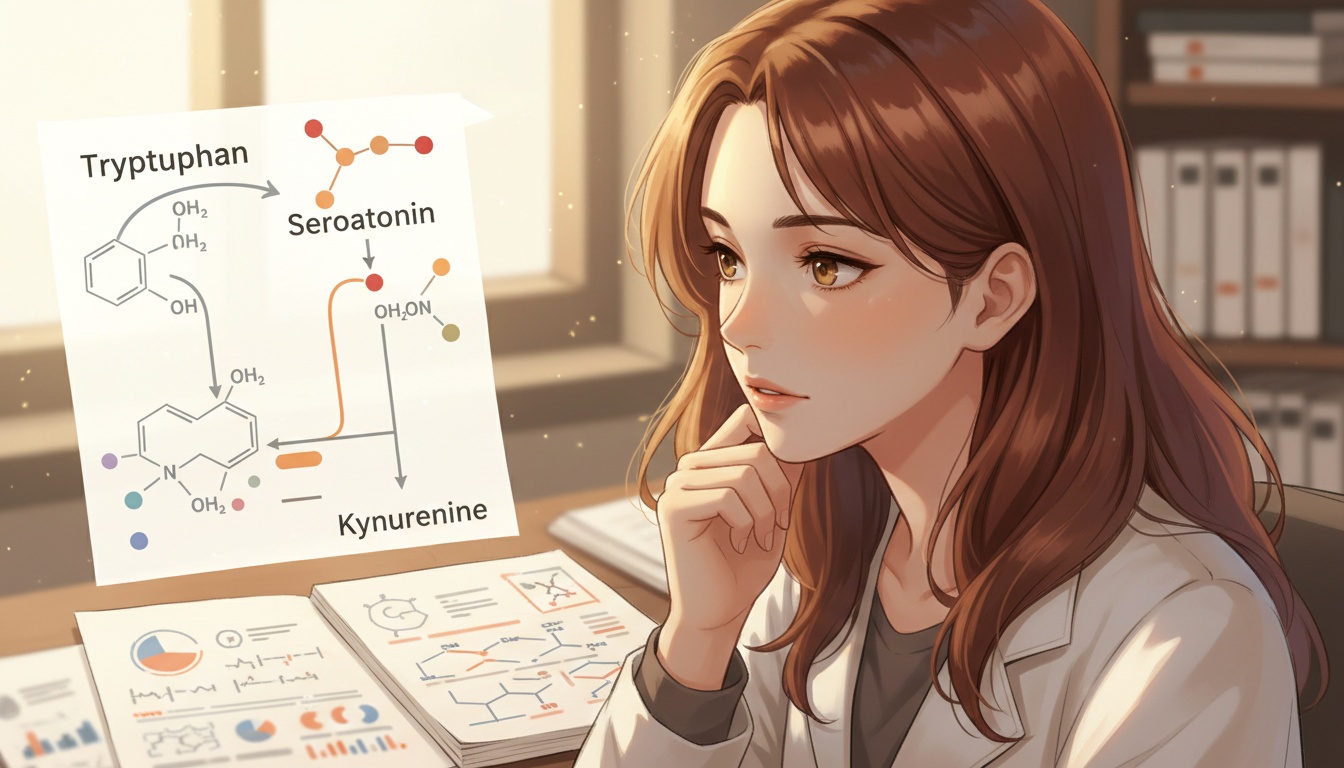
Your body makes roughly 90% of its serotonin in the gut, but it needs the amino acid tryptophan to do it. When gut inflammation activates the enzymes IDO and TDO, tryptophan gets diverted into the kynurenine pathway — producing neurotoxic quinolinic acid instead of serotonin. This “tryptophan steal” is a documented mechanism linking gut dysbiosis to depression and anxiety (O’Mahony et al., 2015).
I covered the gut-brain connection — the vagus nerve, immune signaling, the whole system. This is the deeper mechanism underneath. The piece that explains why some women do everything right — probiotics, fiber, sleep — and still feel flat.
What is the tryptophan steal?
Tryptophan is an essential amino acid you get from food: turkey, eggs, cheese, nuts, seeds. Your body uses it for two jobs — making serotonin and feeding the kynurenine pathway, a metabolic route involved in immune regulation.
Under normal conditions, about 95% of tryptophan goes through kynurenine metabolism. A small fraction converts to serotonin via the enzyme tryptophan hydroxylase. The system balances itself. Mood stays stable.
The molecular switch: two enzymes — indoleamine 2,3-dioxygenase (IDO) and tryptophan 2,3-dioxygenase (TDO) — control how much tryptophan gets shunted into kynurenine. When these enzymes ramp up, less tryptophan is available for serotonin synthesis.
What activates IDO and TDO? Inflammation. Specifically, pro-inflammatory cytokines released when your gut lining is compromised. A 2015 review by O’Mahony et al. in Behavioural Brain Research mapped this mechanism: gut microbiota controls host tryptophan metabolism along the kynurenine pathway, reducing the fraction available for serotonin and increasing neuroactive metabolites (O’Mahony et al., 2015).
The sequence: gut dysbiosis → increased intestinal permeability → immune activation → inflammatory cytokines → IDO/TDO upregulation → tryptophan diverted to kynurenine → less serotonin + more neurotoxic metabolites.
That’s the tryptophan steal. And it’s happening in people who have no idea why they feel anxious or depressed despite doing “everything right.”
Why don’t SSRIs work when this is happening?
The kynurenine pathway isn’t inherently bad. It produces kynurenic acid, which modulates glutamate signaling and has anti-inflammatory properties. The problem is the ratio.
When inflammation drives the pathway too hard, the balance tips. Kynurenine branches into two routes. One produces kynurenic acid (neuroprotective). The other — driven by the enzyme kynurenine 3-monooxygenase (KMO), itself activated by inflammation — produces quinolinic acid. Quinolinic acid is neurotoxic. It overstimulates NMDA receptors in the brain, causing excitotoxicity: neurons firing themselves to death.
A 2021 review in Journal of Neuroinflammation mapped this mechanism in the context of inflammatory bowel disease, showing tryptophan-kynurenine metabolism acts as a direct link between gut inflammation and depression (Chen et al., 2021). People with IBD have dramatically elevated quinolinic acid levels and dramatically higher rates of depression that don’t respond well to standard SSRIs.
Why don’t SSRIs work here? The problem isn’t that your brain isn’t using serotonin correctly — it’s that your gut isn’t making enough of it. SSRIs recycle existing serotonin. If tryptophan is being stolen before it becomes serotonin, there’s less to recycle. You’re rearranging deck chairs on a ship taking on water.
A 2021 review in International Journal of Molecular Sciences by Roth et al. confirmed that the kynurenine pathway is the dominant metabolic fate of tryptophan, and its dysregulation is directly linked to depression, anxiety, and neurodegenerative conditions (Roth et al., 2021). The gut isn’t just “involved” in mental health — it’s running the supply chain.
Why is this hitting women in their 40s harder?
If you’re in your late 30s or 40s, several factors stack against your tryptophan metabolism.
Hormonal shifts during perimenopause affect gut permeability. Estrogen and progesterone influence intestinal tight junctions — the proteins that keep your gut lining sealed. When these hormones fluctuate, those junctions loosen more often, allowing bacterial fragments to cross into your bloodstream and trigger the inflammatory cascade that activates IDO.
Chronic stress adds another layer. Cortisol activates TDO directly — not through inflammation, but through a parallel stress-response pathway. Even if your gut lining is intact, chronic psychological stress can still divert tryptophan away from serotonin. A 2024 review in Cells by Verma et al. documented how stress, hormones, and the gut microbiome interact to shape mental health outcomes through these overlapping pathways (Verma et al., 2024).
Then there’s the standard modern assault: processed food low in tryptophan precursors, antibiotic courses that wiped out beneficial bacteria, NSAIDs that damage the gut lining, and low-fiber diets that starve the bacteria responsible for producing short-chain fatty acids — the compounds that maintain gut barrier integrity.
You’re not imagining it. The brain fog, the low-grade anxiety, the mood dips — they have a molecular mechanism. And it starts with your gut stealing the raw material your brain needs.
What can you do about tryptophan steal?
These actions target the specific mechanisms above — not generic wellness advice.
Reduce gut inflammation first. This is the master switch. As long as inflammatory cytokines are elevated, IDO stays activated and tryptophan keeps getting diverted. Cut seed oils, refined sugar, and alcohol for 30 days. Add omega-3 fatty acids, which directly suppress inflammatory cytokine production. Nordic Naturals Ultimate Omega is the most evidence-backed option — high-potency EPA and DHA that lower the inflammatory markers driving IDO.
Feed the bacteria that protect your gut lining. Short-chain fatty acids — especially butyrate — maintain intestinal tight junctions and reduce permeability. Your gut bacteria produce butyrate from fiber. Most women eat 15g of fiber daily; your bacteria need 30–35g. If you’re not hitting that, a butyrate supplement can help while you increase whole food fiber. Butyrate gummies with probiotics support both the gut lining and the microbial diversity that produces it.
Add tryptophan-rich foods strategically. Turkey, eggs, cheese, nuts, seeds, and salmon are the highest dietary sources. But tryptophan competes with other amino acids to cross the blood-brain barrier. Eating tryptophan-rich foods alongside carbohydrates helps — insulin clears competing amino acids from the blood, giving tryptophan a clearer path to the brain. This isn’t about carb-loading. It’s about timing.
Support your microbiome with targeted strains. Not all probiotics affect tryptophan metabolism, but some do. Lactobacillus and Bifidobacterium species have the strongest evidence for modulating the kynurenine pathway. A 2016 study by Kelly et al. in Journal of Psychiatric Research demonstrated that transferring gut microbiota from depressed humans to rats induced depression-like behavior and altered tryptophan metabolism in the recipients (Kelly et al., 2016). The microbiome isn’t just correlated with mood — it’s causal. Garden of Life Dr. Formulated Gut Brain Axis Probiotics combines pre-, pro-, and postbiotics for gut-brain support.
Manage stress to lower TDO activation. This isn’t a platitude — it’s biochemistry. Cortisol directly upregulates TDO, diverting tryptophan through the kynurenine pathway even without gut inflammation. Slow diaphragmatic breathing (4 seconds in, 6–8 seconds out) activates the vagus nerve and lowers cortisol. Cold water exposure does the same. I wrote about specific techniques for vagal tone if you want the details.
This post contains affiliate links. I only recommend products I’ve researched or used myself. It’s not medical advice — talk to your doctor before starting supplements, especially if you’re on medication.
What is the tryptophan steal? The tryptophan steal is a metabolic mechanism where gut inflammation activates enzymes (IDO and TDO) that divert the amino acid tryptophan away from serotonin production and into the kynurenine pathway. This reduces available serotonin while producing neurotoxic compounds like quinolinic acid, contributing to depression and anxiety.
Why don’t antidepressants work for everyone with depression? SSRIs recycle existing serotonin in the brain, but when gut inflammation diverts tryptophan before it becomes serotonin, there’s less to recycle. The problem is production, not utilization. This explains why some people with gut-driven depression don’t respond well to standard antidepressants.
Does gut inflammation really affect mood? Yes. Research shows gut microbiota controls tryptophan metabolism along the kynurenine pathway, reducing serotonin availability and increasing neuroactive metabolites. A 2015 study by O’Mahony et al. mapped this mechanism, and a 2021 review confirmed it as a direct link between gut inflammation and depression.
How does perimenopause affect serotonin production? Hormonal fluctuations during perimenopause loosen intestinal tight junctions, increasing gut permeability. This allows bacterial fragments into the bloodstream, triggering inflammatory cytokines that activate IDO — the enzyme that diverts tryptophan away from serotonin synthesis.
What foods help with tryptophan metabolism? Turkey, eggs, cheese, nuts, seeds, and salmon are high in tryptophan. Pairing them with carbohydrates helps tryptophan cross the blood-brain barrier by clearing competing amino acids from the blood via insulin. Increasing fiber to 30–35g daily also supports butyrate production, which maintains gut barrier integrity.