Your Gut Bacteria Are Running Your Hormones
You’ve been told your hormones are a brain problem. The hypothalamus talks to the pituitary, the pituitary talks to the ovaries, everything flows from the top down.
That’s half the story.
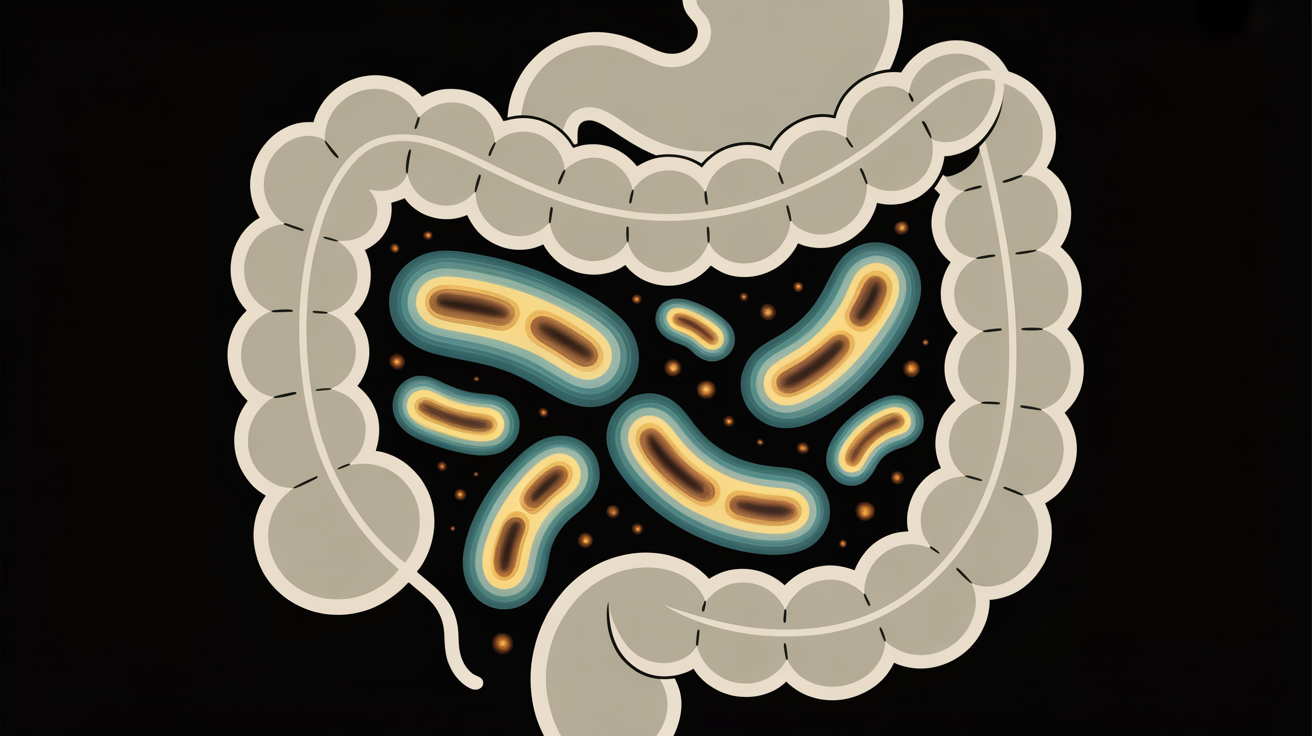
The other half lives in your gut. Specifically, in a group of bacteria called the estrobolome — and they’re not just managing estrogen. They’re running your entire hormonal operating system.
What the estrobolome actually is
Your gut contains trillions of bacteria. Some of them produce an enzyme called β-glucuronidase (gm GUS). This enzyme takes estrogen your liver has already marked for excretion and reactivates it — turning it back into a form your body can use. That reactivated estrogen gets reabsorbed into your bloodstream through the intestinal wall.
This process is called the enterohepatic circulation of estrogen. Your liver packages estrogen for disposal. Your gut bacteria open the package and send it back.
A 2025 review in Nutrients confirmed that gut microbiota metabolize estrogen through this mechanism, and that changes in the estrobolome’s composition directly affect how much active estrogen circulates in your body (PMC, 2025).
A February 2025 narrative review in Acta Biomedica went further — showing that gut microbiota don’t just control estrogen. They also influence androgens, insulin, and other hormones. When the microbiome shifts, ALL of those hormones shift with it (Acta Biomedica, 2025).
How bad gut bacteria break your hormones
When your gut bacteria are out of balance — too much bad bacteria, not enough diversity — here’s what happens:
Estrogen dominance or deficiency
Too much β-glucuronidase = too much estrogen reactivated = estrogen dominance. Symptoms: weight gain, heavy periods, breast tenderness, mood swings, fibroids.
Too little β-glucuronidase = not enough estrogen reactivated = estrogen deficiency. Symptoms: hot flashes, bone loss, vaginal dryness, brain fog. Especially common after menopause.
The estrobolome determines which direction you go.
Insulin resistance
Gut bacteria influence how your body processes glucose and responds to insulin. Dysbiosis (bad gut balance) increases intestinal permeability — “leaky gut” — which triggers systemic inflammation. That inflammation directly causes insulin resistance.
Insulin resistance doesn’t start at the pancreas. It starts in the gut.
Thyroid disruption
Your gut bacteria help convert T4 (inactive thyroid hormone) into T3 (active thyroid hormone). When your microbiome is damaged, this conversion slows down. You end up with normal TSH levels but symptoms of hypothyroidism — fatigue, weight gain, brain fog, hair loss.
Your doctor checks TSH. Your gut is the actual problem.
Cortisol dysregulation
Gut bacteria communicate with the brain through the gut-brain axis. Dysbiosis disrupts this signaling, keeping your cortisol elevated. Chronic stress response. Poor sleep. Weight gain around the midsection.
Your gut is literally telling your brain to stay stressed.
What damages your estrobolome
- Antibiotics — the number one killer of gut diversity. One round can disrupt your microbiome for months.
- Processed food — feeds bad bacteria, starves good ones.
- Chronic stress — shifts gut bacteria composition toward inflammation.
- Alcohol — damages gut lining and reduces diversity.
- Birth control pills — directly alter estrogen metabolism through the gut.
- Low fiber — good bacteria need fiber to produce short-chain fatty acids, which regulate inflammation.
How to fix it
1. Feed the good bacteria
Fiber. Prebiotic fiber. Not supplements — real food. Garlic, onions, leeks, asparagus, bananas, oats. These feed the bacteria that produce the enzymes your hormones need.
2. Add diversity
Different bacteria do different things. The more species in your gut, the better your hormonal regulation. Fermented foods — sauerkraut, kimchi, kefir, yogurt with live cultures — add species you don’t get from a pill.
3. Take the right probiotic
Not all probiotics are equal. For hormonal health, you want strains that specifically support the estrobolome and gut barrier function.
Women’s Probiotic — designed for estrobolome support, gut microbiome diversity, and estrogen metabolism. Specific strains for women’s hormonal health.
Turmeric Probiotic — combines probiotic strains with turmeric for anti-inflammatory gut support. Useful if inflammation is part of your picture.
4. Reduce the damage
Cut the things that kill your good bacteria. Reduce alcohol. Limit processed food. Manage stress — not with willpower, but with actual tools: sleep, sunlight, movement.
5. Get tested
A stool test (GI-MAP or similar) can tell you exactly which bacteria are missing and which are overgrown. Stop guessing. Test.
The bottom line
Your gut isn’t just digesting food. It’s running your hormones. The estrobolome controls your estrogen, influences your insulin, disrupts your thyroid, and keeps your cortisol elevated.
When someone tells you their hormones are “off,” the first question should be: what’s going on in your gut?
Coming soon
- Why women need testosterone too (coming May 10) — the hormone everyone thinks is “male only” and why women need it more than they realize
- How modern life is changing the way your body processes estrogen (coming May 26) — the estrobolome explained in depth
- Cortisol: the aging hormone nobody tests for (coming May 30) — why it matters more than you think
This post contains affiliate links. If you purchase through these links, I may earn a small commission at no extra cost to you. I only recommend products I’ve personally tested or that have strong research backing. 👉 Women’s Probiotic 👉 Turmeric Probiotic
References:
Gut microbiota has the potential to improve health of menopausal women by regulating estrogen. Nutrients (2025). PMC
Gut microbiota-estrogen axis: Its influence on female health outcomes — A narrative review. Acta Biomedica Atenei Parmensis (Feb 2025). Journal
Gut microbiome’s hidden role in women’s hormonal health. Food Navigator USA (Oct 2025). Article
The Gut Microbiome’s Role in Women’s Reproductive Health. Gastroenterology Advisor (Feb 2026). Article
Unraveling the Role of Gut Microbiota in (Phyto)Estrogen Metabolism. PubMed (2024). PubMed