Prebiotics vs probiotics — which one do you actually need
I see this confusion every day. Someone buys an expensive probiotic. Takes it for a month. Feels nothing. Stops taking it. Decides gut health is a scam.
It’s not a scam. You just bought the wrong thing. Or you bought the right thing and didn’t support it.
Let me explain the difference in plain language.
The garden analogy
Think of your gut as a garden.
Probiotics are the seeds. They’re the live bacteria you’re adding to your gut. Good bacteria that help with digestion, immunity, and inflammation.
Prebiotics are the fertilizer. They’re the food that feeds the good bacteria already living in your gut. Without food, the bacteria die — whether you planted them or they were already there.
If you take probiotics without prebiotics: You’re planting seeds in dry soil. Some might survive. Most won’t.
If you take prebiotics without probiotics: You’re fertilizing whatever’s already growing. If your garden is full of weeds (bad bacteria), you’re feeding the weeds.
The best approach: Both. Plant good seeds (probiotics) AND feed them (prebiotics).
What are probiotics?
Probiotics are live microorganisms that provide health benefits when consumed in adequate amounts. They’re found in fermented foods and supplements.
Common sources:
- Yogurt (look for “live and active cultures”)
- Kefir
- Sauerkraut
- Kimchi
- Kombucha
- Miso
- Probiotic supplements
What the research says:
A 2022 systematic review examined the gut microbiome’s role in health and found that probiotic supplementation can improve gut microbiota diversity, reduce inflammation, and support immune function. The effects were most pronounced in individuals with existing gut dysbiosis (imbalance).
For women specifically, a 2024 study found that gut microbiota significantly influences female health — including estrogen metabolism, mood regulation, and immune response. Certain probiotic strains (Lactobacillus and Bifidobacterium) were particularly beneficial.
The problem: Not all probiotics are equal. Most store-bought yogurts have more sugar than bacteria. Many probiotic supplements contain strains that don’t survive stomach acid. And the CFU count (colony-forming units) on the label doesn’t tell you if those bacteria are actually alive.
What are prebiotics?
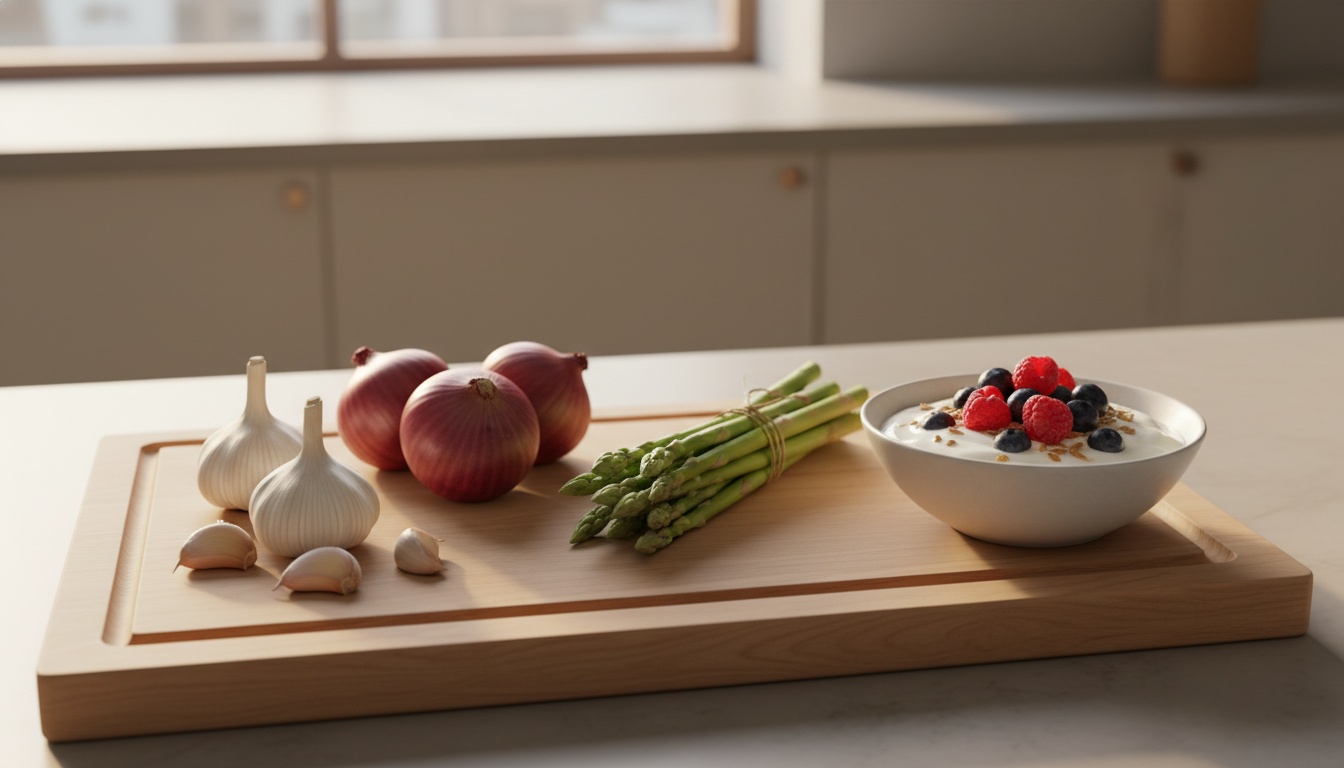
Prebiotics are non-digestible fibers that feed the beneficial bacteria in your gut. Your body can’t digest them — but your gut bacteria can.
Common sources:
- Garlic
- Onions
- Leeks
- Asparagus
- Bananas (slightly green)
- Oats
- Apples
- Chicory root
- Jerusalem artichokes
- Flaxseeds
What the research says:
Prebiotics selectively stimulate the growth of beneficial bacteria like Bifidobacteria and Lactobacilli. A 2024 review found that prebiotic intake was associated with improved gut barrier function, reduced inflammation, and better mineral absorption (especially calcium and magnesium).
The underrated part: Most people get plenty of probiotics from supplements but almost no prebiotics from food. Your gut bacteria need fiber to survive. Without it, even the best probiotic supplement won’t work long-term.
The estrobolome connection (this is the part nobody talks about)
Your gut has a specific set of bacteria called the estrobolome. These bacteria help metabolize estrogen. When the estrobolome is imbalanced, estrogen recirculates in your body instead of being eliminated.
This matters for women over 35 because:
- Perimenopause changes estrogen levels
- An imbalanced estrobolome can make symptoms worse
- Bloating, mood swings, and weight gain can all be connected to estrogen recirculation
- Both probiotics and prebiotics support estrobolome health
A healthy gut = better estrogen metabolism = fewer hormonal symptoms.
👉 Women’s Probiotic — Estrobolome Support 👉 Turmeric Probiotic — Anti-Inflammatory Gut Support
How to actually make probiotics work
Step 1: Feed the bacteria (prebiotics) Eat 1-2 servings of prebiotic-rich foods daily. Garlic and onions in your cooking count. A slightly green banana with breakfast counts. You don’t need supplements — just eat the foods.
Step 2: Add good bacteria (probiotics) Eat fermented foods daily OR take a quality probiotic supplement. Look for:
- Multiple strains (Lactobacillus + Bifidobacterium)
- At least 10 billion CFU
- Delayed-release capsules (survives stomach acid)
- Refrigerated (bacteria are alive)
Step 3: Stop feeding the bad bacteria Sugar, processed food, and alcohol feed harmful bacteria. You don’t have to eliminate them — but reducing them helps the good bacteria win.
Step 4: Be patient Gut changes take 4-12 weeks. You won’t feel different in 3 days. Commit to the process.
What I’d actually recommend
If you eat a lot of processed food: Start with prebiotics. Add garlic, onions, and oats to your diet. Your gut bacteria need food before you add more of them.
If you eat well but have gut issues: Add a quality probiotic. Look for multi-strain formulas with delayed-release capsules.
If you want the full approach: Both. Prebiotic-rich foods daily + a quality probiotic supplement. This is the garden with good seeds AND good soil.
Skip: Expensive probiotic drinks loaded with sugar. They cancel out the benefits. Yogurt with 20g of sugar per serving is dessert, not medicine.
The bottom line
Probiotics add good bacteria. Prebiotics feed good bacteria. You need both.
Most people buy probiotics and wonder why they don’t work. It’s because they planted seeds in dry soil. Feed the garden first, then plant.
And the estrobolome connection? That’s the part that makes this relevant for women specifically. Your gut isn’t just about digestion — it’s about hormones too.
What’s your gut health routine? Are you team probiotics, prebiotics, or both?
References:
The Gut Microbiome in Depression and Potential Benefit of Prebiotics, Probiotics and Synbiotics. Int J Mol Sci (2022). PMID: 35562885
Gut microbiota and female health. World J Gastroenterol (2024). PMID: 38617735