🎧 Listen to this article
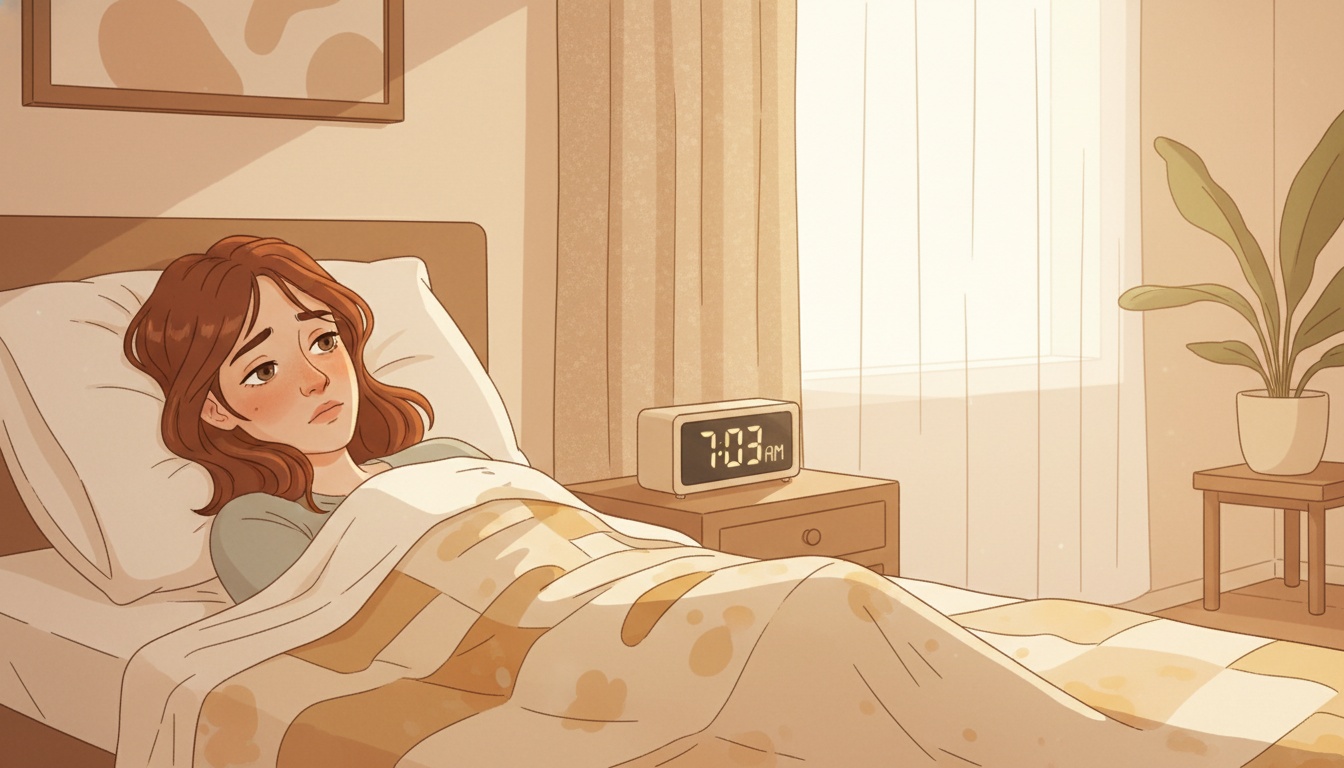
You did everything right. Lights off by 10:30. No screens after 9. Magnesium glycinate before bed. Eight full hours between the sheets. And you still wake up feeling like you got hit by a truck. Your alarm goes off and the first thing you feel isn’t rested — it’s resentful. Because the math doesn’t add up. Eight hours should be enough. Your fitness tracker says your sleep score was 87. So why do you feel like you didn’t sleep at all?
The answer is that hours in bed are not hours asleep. And even hours asleep are not hours in deep sleep. Something is breaking your sleep architecture — the actual structure of your night — and it’s happening quietly, without you waking up enough to notice.
You’re sleeping, but not recovering
Sleep isn’t one continuous block. It cycles through stages: light sleep (N1, N2), deep sleep (N3, also called slow-wave sleep), and REM. Deep sleep is where your body physically recovers — tissue repair, immune function, growth hormone release. REM is where your brain processes emotions and consolidates memory. You need both.
Here’s what most people don’t realize: you get most of your deep sleep in the first 3–4 hours of the night, and most of your REM in the last 3–4 hours. If something disrupts the first half of your night, you lose deep sleep. If something disrupts the second half, you lose REM. Either way, you can be “asleep” for 8 hours and still wake up unrestored.
A 2024 study in Maturitas found that menopausal women with worse sleep architecture — specifically less time in deep sleep — had significantly higher cortisol levels, even when their self-reported insomnia and sleepiness scores were normal Sahola et al., Maturitas (2024). Translation: you can feel like you slept fine and still have garbage sleep quality on the inside.
An earlier study on memory consolidation during sleep in patients with primary insomnia confirmed that sleep architecture and nocturnal cortisol release are tightly linked — when cortisol stays elevated at night, deep sleep gets compressed Backhaus et al., Biol Psychiatry (2006).
The cortisol trap: your stress hormone is running the night shift
Cortisol should be low at night. That’s the whole point of the circadian rhythm — cortisol peaks in the morning to wake you up and drops to its lowest point around midnight so you can sleep deeply. But for a lot of women over 35, this rhythm is broken.
Perimenopause disrupts the cortisol curve. Estrogen and progesterone both modulate the HPA axis (your stress response system), and as they fluctuate and decline, cortisol can stay elevated into the evening and spike prematurely at night. A 2023 study in Climacteric found that external sleep disturbances had a significantly greater impact on sleep architecture in perimenopausal and postmenopausal women compared to premenopausal controls Virtanen et al., Climacteric (2023).
This is why you’re waking up at 3am — cortisol is spiking hours before it should. We covered this mechanism in detail in Your Cortisol Is Stealing Your Sleep and Perimenopause 3am Wake-Ups.
But even if you don’t wake up fully, elevated cortisol fragments your sleep stages. You spend more time in light sleep and less in deep sleep. Eight hours of shallow, restless sleep isn’t restorative — it’s just lying still.
Blood sugar: the midnight crash you don’t feel
If you eat dinner at 7pm and don’t eat again until morning, your blood sugar drops overnight. For most people, this is fine — your liver releases glycogen to maintain stable glucose. But if your insulin sensitivity is impaired (and it quietly is for most women over 38, even with normal fasting glucose), your body can overshoot the correction.
Low blood sugar triggers an adrenaline and cortisol response — your body’s emergency system to raise glucose back up. This happens at 2 or 3am, right when you should be in your deepest sleep. You might not fully wake up, but your sleep stages shift from deep to light. You lose the recovery window.
A 2024 randomized controlled trial on sleep timing and glucose metabolism found that disrupted sleep patterns directly impaired glucose regulation in people with prediabetes Bouman et al., Trials (2024). The relationship goes both ways: bad blood sugar breaks sleep, and broken sleep worsens blood sugar. It’s a loop.
A study on insomnia in patients with type 2 diabetes found that insomnia risk factors included irregular meal timing and elevated evening glucose — suggesting that what you eat and when you eat it matters for sleep quality Li et al., Sleep Med (2025).
Inflammation: the silent sleep thief
Low-grade chronic inflammation doesn’t just hurt during the day. It degrades your sleep architecture at night. Inflammatory cytokines — especially IL-6 and TNF-alpha — interfere with slow-wave sleep. The more systemic inflammation you carry, the less deep sleep you get.
This is particularly relevant if you have unexplained fatigue alongside other inflammatory signals: joint stiffness, brain fog, skin issues, digestive problems. The inflammation-sleep connection is bidirectional: inflammation disrupts sleep, and poor sleep increases inflammation. Breaking the cycle requires addressing both sides.
A study on insomnia and bloodstream infections found that insomnia symptoms were associated with significantly increased infection risk — the immune suppression from poor sleep has real, measurable consequences Thorkildsen et al., J Sleep Res (2023). Your body isn’t resting. It’s running a low-grade immune response all night instead.
What to actually do
Get your cortisol curve tested. A 4-point salivary cortisol test (morning, noon, evening, night) shows whether your rhythm is flattened, reversed, or spiked at night. This is the single most useful data point for unexplained fatigue. We covered testing options in At-Home Hormone Testing.
Stop eating 3 hours before bed — but don’t go to bed hungry. A small snack with protein and fat (like a handful of nuts or some yogurt) at 7pm is fine if you sleep at 10. A huge meal at 9pm is not. The goal is stable blood sugar through the night, not a long fast that triggers an adrenaline response.
Take magnesium glycinate, not oxide. Magnesium glycinate supports GABA activity (the calming neurotransmitter) and doesn’t cause GI distress. Magnesium oxide is poorly absorbed and mostly acts as a laxative. We broke down every form in Magnesium for Sleep: Which Type Actually Works.
Address the inflammation. If your sleep is consistently unrefreshing despite good habits, the root cause may be systemic inflammation. Anti-inflammatory nutrition, stress management, and targeted supplements (omega-3s, curcumin) can help. See 22 Foods That Lower Cortisol for dietary changes.
Track what your tracker doesn’t show you. Most wearables measure total sleep time and heart rate variability. Few accurately measure deep sleep percentage. If you’re relying on a “sleep score” of 85+ to tell you that you slept well, you might be missing the point. Ask your doctor about a sleep study if fatigue persists despite 7–9 hours in bed.
Magnesium Glycinate with Zinc (Organics Ocean) — The form that actually absorbs and supports sleep without GI issues. Available on Amazon.
Magnesium L-Threonate — Neuro-Mag (Life Extension) — Crosses the blood-brain barrier. Best for brain fog and cognitive fatigue alongside poor sleep. Available on Amazon.
What to stop doing
Stop assuming more hours = better sleep. If your sleep quality is broken, adding more hours just means more hours of bad sleep. The problem is in the architecture, not the duration.
Stop ignoring 3am wake-ups. If you’re waking at 3am more than twice a week, that’s a cortisol signal, not a coincidence. It’s your body telling you something is off with your stress response. Don’t just “try to go back to sleep.”
Stop using melatonin as a sleep quality fix. Melatonin helps you fall asleep. It does not improve deep sleep or sleep architecture. If you fall asleep fine but wake up exhausted, melatonin isn’t the answer. The bottleneck is later in the night, not at the onset.
What we still don’t know
The interaction between perimenopausal hormone fluctuations and sleep architecture is still poorly mapped. We know estrogen affects serotonin and GABA pathways. We know progesterone has direct sedative properties. But the clinical data on how declining hormone levels specifically redistribute sleep stages across the night — and whether bioidentical hormone replacement can restore normal architecture — is still limited. Most sleep studies in women either exclude perimenopausal participants or don’t stratify by hormonal status. That gap matters, because the treatment implications are completely different depending on where you are in the transition.
Save for later — send this to someone who brags about sleeping 8 hours but looks exhausted.