🎧 Listen to this article
You’re doing everything right. You’re prioritizing sleep, managing stress, and fueling your body—yet that deep, cellular exhaustion persists. If this sounds familiar, the bottleneck isn’t your habits. It’s likely a slowdown in your cells’ fundamental power plants: the mitochondria. And for lasting relief, you need cordyceps for energy, a natural compound that works at this root cause.
What’s actually happening inside your cells
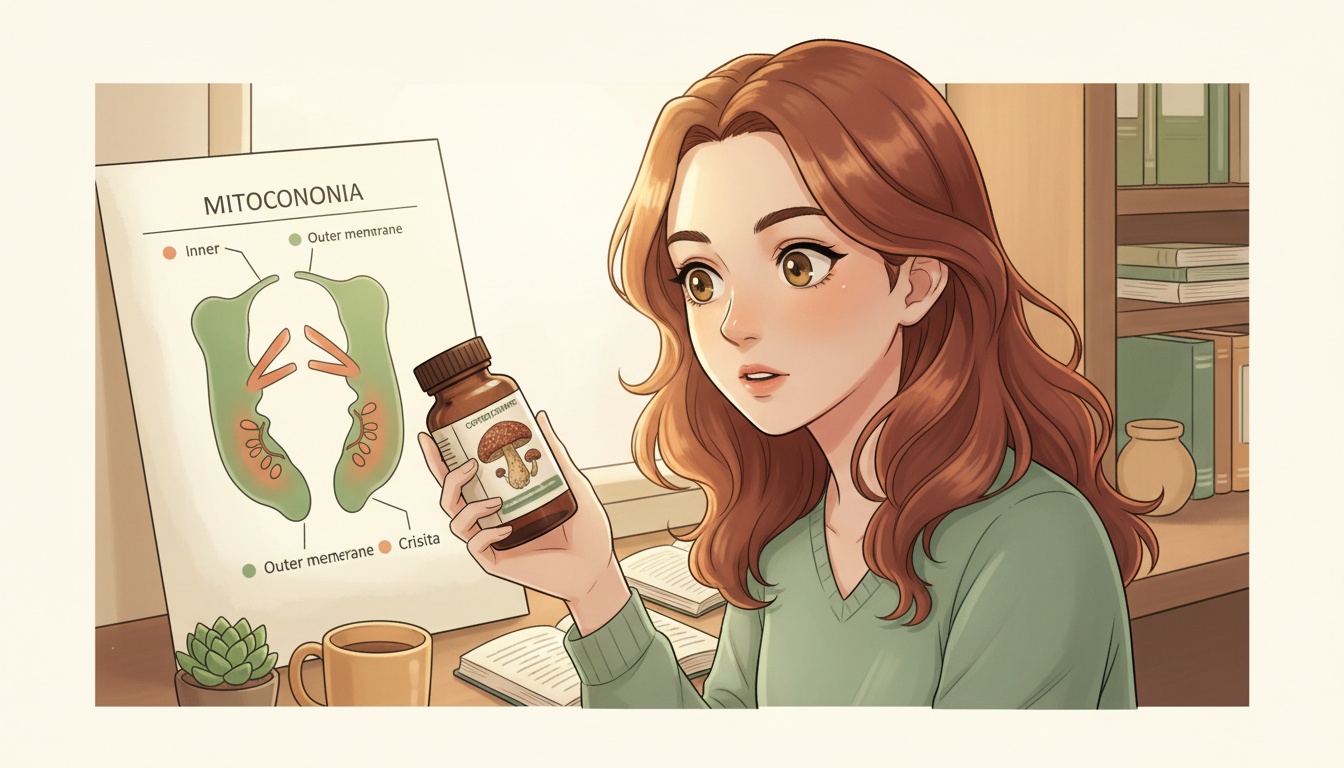
Your mitochondria are the organelles responsible for producing adenosine triphosphate (ATP), the universal energy currency your body runs on. They require oxygen and nutrients to function. When mitochondrial efficiency declines, no amount of external stimulation—like caffeine—can compensate. Caffeine works by blocking adenosine receptors in the brain, masking fatigue signals. It doesn’t generate energy; it just hides the low-battery warning.
Cordyceps takes a fundamentally different, more intelligent approach. The mushroom contains cordycepin (3’-deoxyadenosine), a bioactive compound that works with your energy pathways. Research shows it upregulates enzymes in the Krebs cycle, the central engine of mitochondrial energy production, and increases cellular ATP levels directly. One study published in the International Journal of Medicinal Mushrooms confirms cordyceps enhances ATP generation through these mitochondrial pathways (Veena RK et al., 2020). Think of it this way: coffee silences the alarm. Cordyceps actually services the engine.
The specific challenge for women over 35
If you’re in your 30s, 40s, or 50s, you’re contending with a physiological shift. Mitochondrial function naturally declines with age, and this process is significantly influenced by female sex hormones. Estrogen is a key regulator of mitochondrial biogenesis—the creation of new mitochondria. As perimenopause progresses and estrogen levels fluctuate and eventually decline, your cells produce fewer new power plants while the existing ones operate less efficiently.
This isn’t a willpower issue; it’s a change in cellular infrastructure. The afternoon crash that hits harder, the extended recovery after a workout, and the brain fog that won’t lift are all common symptoms of this decline. Traditional Chinese Medicine has historically used cordyceps as a “Yin-nourishing” tonic, and modern science is beginning to understand why: it appears to support the cellular systems that are most vulnerable to hormonal aging.
How cordyceps enhances oxygen utilization for sustained energy
Beyond upregulating energy-production enzymes, cordyceps has a significant impact on how your body uses oxygen. Efficient oxygen delivery is critical for mitochondrial ATP synthesis. A landmark study in Life Sciences found that Cordyceps supplementation enhances both oxygen utilization and cellular energy production through mitochondrial pathways (Siu KM et al., 2004). This dual action—optimizing the fuel (ATP) and the air intake (oxygen)—is what creates a profound difference in daily energy and exercise resilience.
For active women, this means better endurance and faster recovery. The “Yang energy” ancient practitioners described is, in modern terms, the synergistic boost in aerobic capacity and mitochondrial output. By supporting your cells’ ability to efficiently convert oxygen into usable energy, cordyceps for energy helps address fatigue at its metabolic source, offering a sustainable foundation for vitality that doesn’t rely on stimulants.