🎧 Listen to this article
You feel cold when nobody else does. Your hair is on the bathroom floor. Your weight creeps up even though you haven’t changed anything. Your brain feels like it’s running through wet concrete.
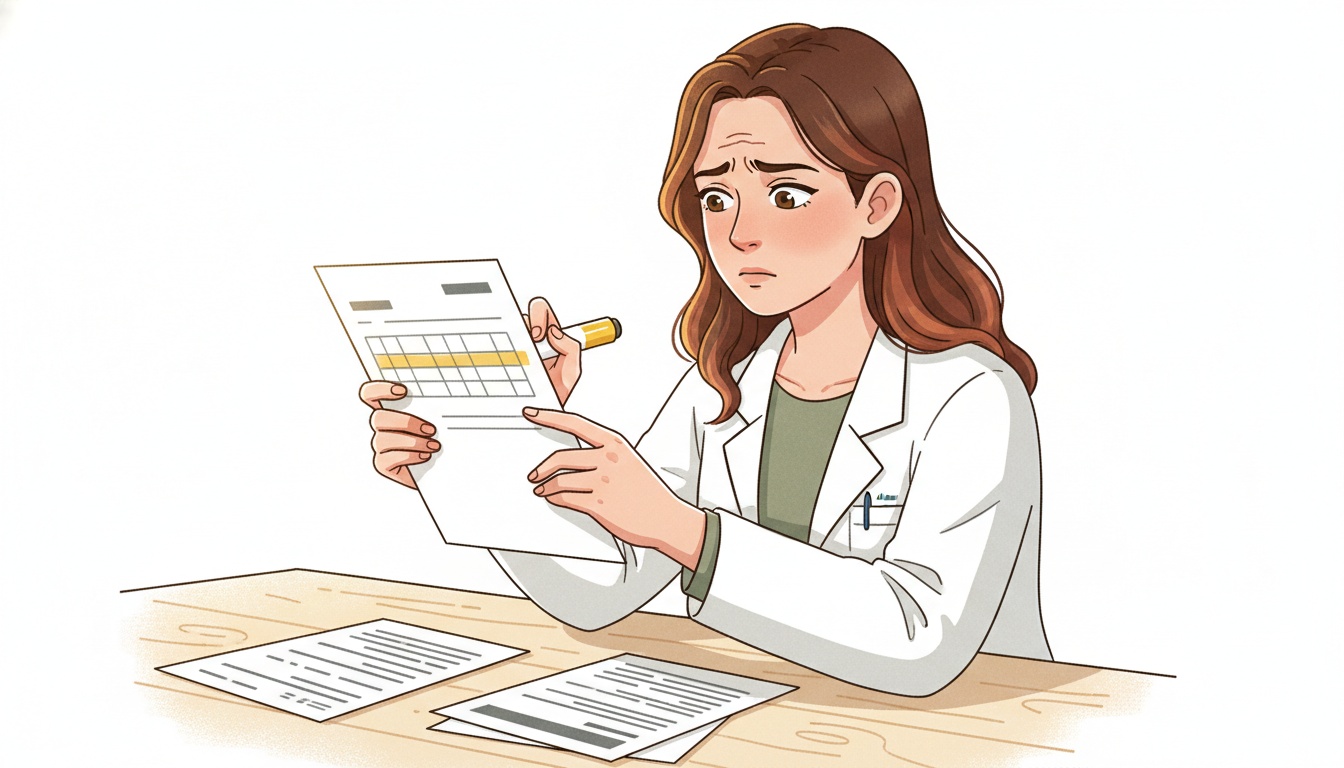
You go to the doctor. They test your TSH. It comes back 2.8. “Normal.”
You’re not crazy. The test was incomplete.
Hashimoto’s thyroiditis is the most common cause of hypothyroidism in iodine-sufficient regions, with peak incidence in the fifth decade of life. According to the American Thyroid Association, most people with Hashimoto’s have detectable TPO antibodies in their blood, yet many are never tested because TSH alone is considered sufficient screening (ATA, 2023). Antibodies can circulate for 7 to 10 years before TSH moves out of the standard reference range — years during which thyroid tissue is actively being destroyed.
What is Hashimoto’s thyroiditis?
Hashimoto’s is an autoimmune disease, not a thyroid disease. Your immune system produces antibodies — specifically TPO antibodies (thyroid peroxidase) and sometimes Tg antibodies (thyroglobulin) — that target and destroy thyroid tissue. Over years, this destruction reduces your thyroid’s ability to produce hormones. Eventually, your TSH rises because your pituitary is screaming at a failing gland.
The StatPearls medical reference confirms Hashimoto’s as the most common cause of hypothyroidism in iodine-sufficient areas, with diagnosis most commonly between ages 30-50 (StatPearls, NCBI).
Why is Hashimoto’s underdiagnosed in women?
The diagnostic process fails women in three specific ways.
The TSH reference range is too wide. The standard range of 0.5–4.5 mIU/L was established on populations that include sick, elderly, and undiagnosed individuals. Functional medicine practitioners consider anything above 2.5 mIU/L worth investigating — especially with symptoms. Your GP sees 2.8 and writes “normal.” You feel dead. Both are true. The range is the problem.
Antibodies aren’t ordered as standard screening. Most primary care physicians order TSH alone. If TSH is “normal,” the investigation stops. But TSH measures pituitary output — it tells you nothing about whether your thyroid tissue is under autoimmune attack. You need TPO antibodies and Tg antibodies to catch Hashimoto’s. These tests exist. They’re cheap. They’re just not ordered unless you ask — or unless your TSH is already elevated, by which point you’ve lost significant thyroid tissue.
Symptoms get dismissed as “aging” or “stress.” The symptom profile for Hashimoto’s overlaps with perimenopause, depression, and general fatigue: weight gain, brain fog, hair loss, cold intolerance, constipation, dry skin, joint pain, mood changes. A woman in her 40s with these symptoms gets told she’s “getting older.” The autoimmune attack continues undetected.
A study of female relatives of patients with autoimmune thyroid disease found that TPO antibody titers correlated significantly with TSH levels — meaning antibodies were detectable before TSH was abnormal (Pedersen et al., Eur J Endocrinol, 2003 — PubMed).
What symptoms should trigger thyroid antibody testing?
If you have three or more of these, ask your doctor for a full thyroid antibody panel:
- Cold hands and feet, even in warm environments
- Unexplained weight gain (5-15 lbs over 6-12 months without diet change)
- Hair thinning — especially outer third of eyebrows
- Brain fog, word-finding difficulty, slow processing
- Fatigue that isn’t fixed by sleep
- Constipation
- Dry skin, brittle nails
- Joint stiffness, especially morning
- Depression or anxiety that doesn’t respond well to SSRIs
- Heavy or irregular periods
- Family history of autoimmune disease (lupus, rheumatoid arthritis, type 1 diabetes, celiac)
What labs should I request for Hashimoto’s?
Ask your doctor for these specifically:
- TSH — still useful, but not sufficient alone
- Free T4 — the active thyroid hormone your body actually uses
- Free T3 — the most active form; often not tested but critical
- TPO antibodies — the primary Hashimoto’s marker
- Tg antibodies — secondary autoimmune thyroid marker
- Reverse T3 (optional but helpful) — shows if your body is converting T4 to inactive reverse T3 instead of active T3
If your doctor won’t order these, you can get them done directly through walk-in labs (Quest, LabCorp) in most US states without a prescription. Cost: approximately $100-150 for the full panel.
What if antibodies are positive but TSH is “normal”?
This is the most common scenario — and the one most doctors will tell you to “just watch.”
Watching means watching your thyroid tissue slowly destroyed while you get sicker. The autoimmune attack doesn’t pause because your TSH is still technically in range.
Reduce the autoimmune trigger load:
- Gluten: A subset of Hashimoto’s patients have cross-reactivity between thyroid tissue and gluten (molecular mimicry). Trial 90 days gluten-free and retest antibodies.
- Selenium: 200 mcg/day of selenium has been shown in multiple studies to reduce TPO antibodies. It’s one of the few supplements with real evidence for Hashimoto’s.
- Gut healing: Intestinal permeability (“leaky gut”) is a documented trigger for autoimmune flares. Address gut health before anything else.
Support the thyroid directly:
- Iodine: Only if deficient. Excess iodine worsens Hashimoto’s.
- Zinc: 30mg/day supports thyroid hormone conversion (T4 → T3).
- Iron/ferritin: Ferritin below 40 impairs thyroid function. Get tested.
Monitor regularly:
- Retest antibodies every 6 months. The goal is reduction, not just stability.
- Track symptoms, not just labs. Your body knows before the numbers do.
How does Hashimoto’s connect to other hormonal issues?
Hashimoto’s rarely exists alone. If you have thyroid antibodies, your risk of other autoimmune conditions increases — and your risk of the hormonal cascade we write about on this site multiplies.
Thyroid dysfunction drives cortisol dysregulation (HPA axis compensates for low thyroid output), insulin resistance (low thyroid = slower glucose metabolism), estrogen dominance (thyroid affects how your liver clears estrogen), and systemic inflammation (autoimmune attack produces cytokines that drive it). This is why we treat the thyroid as a system, not an organ. Fixing one hormone while ignoring the antibodies is like painting over rust.
This post contains affiliate links. If you purchase through our links, we may earn a small commission at no extra cost to you.
Recommended products
If you’re addressing Hashimoto’s and thyroid health, these are the products we’ve researched and believe in:
- Selenium 200mcg — one of the few supplements with real evidence for reducing TPO antibodies in Hashimoto’s. 200mcg daily.
- Thyroid Support Supplement — formula with iodine, selenium, and zinc for thyroid hormone conversion support. Only if you’re confirmed deficient.
- Magnesium Glycinate — supports the HPA axis that compensates for low thyroid output. 300-400mg daily.
Sources
- American Thyroid Association. “Hashimoto’s Thyroiditis.” 2023. Link
- StatPearls. “Hashimoto Thyroiditis.” NCBI Bookshelf. 2026. Link
- Pedersen IB, et al. “Risk factors for and prevalence of thyroid disorders in a cross-sectional study among healthy female relatives of patients with autoimmune thyroid disease.” Eur J Endocrinol. 2003. PubMed
- Mayo Clinic. “Hashimoto’s disease — Diagnosis & treatment.” 2025. Link