🎧 Listen to this article
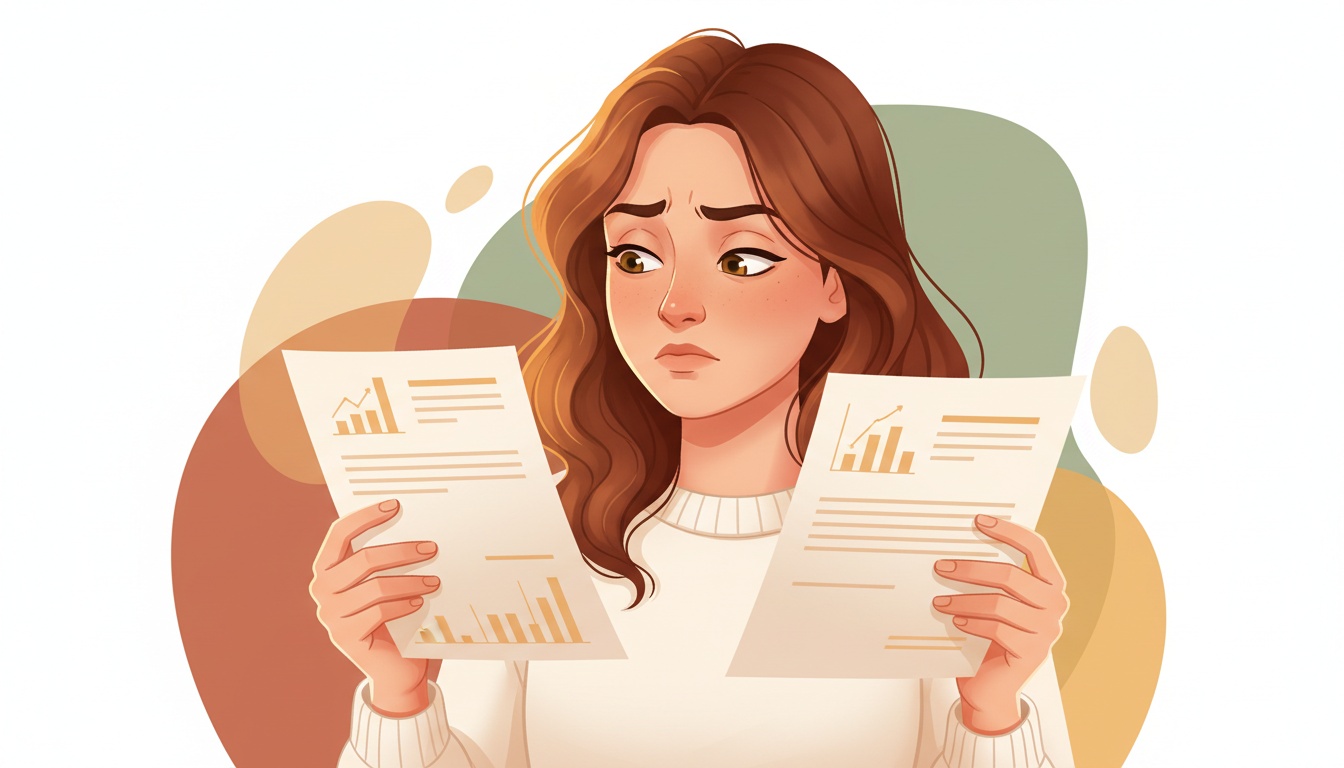
You did the right thing. You went to the doctor. You said: “I’m tired all the time, I’m gaining weight for no reason, my hair is thinning, I can’t think clearly.” They ran the bloodwork. TSH came back. “Normal.” You were sent home with a suggestion to sleep more and reduce stress.
But you’re not normal. Something shifted, and now you have data that says you’re fine and a body that says otherwise.
A 2025 multicenter study by Li et al. in Annals of Internal Medicine confirmed what endocrinologists have suspected for years: TSH reference intervals shift significantly with age, sex, and race, yet most labs still apply one range (0.4–4.0 mIU/L) to everyone. A separate 2023 review in Cureus found that subclinical hypothyroidism in postmenopausal women has measurable metabolic effects on weight, lipids, and cardiovascular risk even when labs look acceptable.
Why does my thyroid test say “normal” when I feel terrible?
Your lab report uses a reference interval of 0.4 to 4.0 mIU/L for TSH (thyroid-stimulating hormone). If your number lands inside that box, you’re “normal.” The problem is that this range was built from population averages that ignore how thyroid function changes as you age; it treats a 25-year-old and a 48-year-old as if their thyroids should behave identically. Research now shows they don’t.
The 2025 study by Li et al. analyzed thyroid function reference intervals across different ages, sexes, and racial groups, and found that the TSH distribution shifts upward with age. What’s “normal” for a 30-year-old woman may be elevated for her metabolic state at 48. Applying the same 0.4–4.0 mIU/L range to everyone misses this shift.
Motlani et al. (2023) confirmed the downstream cost: in postmenopausal women, subclinical hypothyroidism affects weight regulation, lipid metabolism, and cardiovascular risk. The implication is uncomfortable. Many women walking around with “normal” thyroid labs have a thyroid that’s underperforming for their specific age and metabolic needs. They’re symptomatic. They’re told it’s not their thyroid. But it might be.
What is subclinical hypothyroidism?
Subclinical hypothyroidism means your TSH is elevated (usually between 4.0 and 10.0 mIU/L) while your T4 and T3 levels stay within normal range. Your thyroid is technically working, but it’s working harder than it should, and the output is declining.
The symptoms overlap heavily with perimenopause, aging, and “just being stressed”:
- Unexplained weight gain (especially around the midsection)
- Fatigue that doesn’t resolve with sleep
- Brain fog and difficulty concentrating
- Cold sensitivity
- Dry skin and thinning hair
- Constipation
- Elevated cholesterol
- Depression or low mood
Sound familiar? These are the same symptoms that bring women to the doctor’s office, get them told “your labs are normal,” and send them home.
The metabolic effects are real even when the labs look acceptable. Subclinical hypothyroidism slows basal metabolic rate, impairs lipid metabolism, increases cardiovascular risk, and interacts with the hormonal shifts of perimenopause in ways that compound each other.
How does perimenopause affect my thyroid?
As estrogen declines in perimenopause, it loses its stabilizing effect on the thyroid. Estrogen modulates thyroid-binding globulin (TBG), the protein that carries thyroid hormones through your bloodstream. When estrogen drops, TBG drops, and free hormone levels shift. Your thyroid might be producing the same amount of hormone, but less of it reaches your cells.
Cortisol disruption (covered in the 3am wake-up post) suppresses thyroid function further. Cortisol inhibits the conversion of T4 (inactive) to T3 (active). So even if your thyroid produces adequate T4, your body can’t use it efficiently because cortisol is blocking the conversion.
The insulin resistance from the quiet weight gain post adds another layer: it disrupts the hypothalamic-pituitary-thyroid axis.
These three systems don’t operate in isolation. When one shifts, the others compensate, and the compensation eventually fails. That’s why a woman can have “normal” thyroid labs and still feel terrible; the thyroid is only one part of a system that’s collectively dysregulated.
Why do doctors miss thyroid problems in women?
The reasons are structural, not malicious.
The reference range is too broad. A TSH of 3.8 is “normal” by most lab standards. For a 45-year-old woman, it may indicate early thyroid dysfunction that won’t be diagnosed until it reaches 5.0 or 6.0, years later.
TSH alone isn’t enough. Most routine panels only test TSH. A full panel (TSH, free T4, free T3, thyroid antibodies) gives a much clearer picture, but insurance often won’t cover it unless TSH is already abnormal.
Symptoms get attributed to aging. “You’re 45, you’re tired, that’s normal.” The symptoms are dismissed as inevitable rather than investigated as treatable.
Hashimoto’s is underdiagnosed. As discussed in this post, autoimmune thyroiditis affects 1 in 8 women and often progresses silently for years before TSH becomes abnormal enough to trigger a diagnosis. By the time it’s caught, significant thyroid tissue may already be destroyed.
What should I do if my thyroid labs are “normal”?
Get the full panel, look at your numbers in context, and treat the surrounding hormonal system. Here’s what that means in practice.
Get the full panel, not just TSH
Ask your doctor for:
- TSH — the screening marker
- Free T4 — how much inactive thyroid hormone is available
- Free T3 — how much active hormone is reaching your cells
- TPO antibodies — to check for Hashimoto’s
- Thyroglobulin antibodies — another autoimmune marker
If your doctor won’t order it, direct-to-consumer lab services can; the full panel costs $100–200 out of pocket.
Look at your numbers in context
A TSH of 3.5 might be “normal” on the lab report, but if your free T3 sits at the bottom of the range and you have symptoms, that’s worth investigating. The reference range is a statistical average, not a health guarantee.
Consider the interaction with other hormones
If you’re in perimenopause, your thyroid should be evaluated alongside estrogen, progesterone, and cortisol. Treating one without addressing the others leaves the underlying dysregulation intact.
Support conversion from T4 to T3
Your body has to convert T4 into the active T3 form, and several factors impair that conversion:
- Selenium — required by the deiodinase enzyme that converts T4 to T3; 200mcg daily from selenium-rich foods or supplementation
- Zinc — also required for conversion; 15–30mg daily
- Iron — low iron impairs thyroid peroxidase, so get ferritin checked
- Cortisol management — high cortisol blocks T4-to-T3 conversion; sleep, stress, and inflammation all matter here
Don’t accept “normal” as the final answer
If your labs come back “normal” but your symptoms persist, push for the full panel. Push for antibody testing. Push for a doctor who looks at the whole picture rather than a single number.
The 2025 research is clear: current reference ranges don’t work for everyone. If your body is telling you something is wrong and the labs say otherwise, the labs might need a closer look — not your body.
This is the second post in the thyroid series. For the autoimmune angle — why Hashimoto’s is the most underdiagnosed thyroid condition in women — read The thyroid condition your doctor might be missing.
For how thyroid connects to the broader hormonal shift after 38, see Why quiet weight gain happens after 38.
Sources:
- Li Q, et al. “Thyroid Function Reference Intervals by Age, Sex, and Race: A Cross-Sectional Study.” Annals of Internal Medicine. 2025;178(7):921-929. PMID: 40324200
- Motlani V, et al. “Thyroid Disorders in Postmenopausal Women: A Review.” Cureus. 2023. PMID: 37868321
FAQs:
What is a normal TSH level for women over 40? Most labs use 0.4–4.0 mIU/L as the reference range, but a 2025 study in Annals of Internal Medicine found that TSH distribution shifts upward with age, meaning one range doesn’t fit all ages. A TSH of 3.5 may be “normal” on paper yet suggest early dysfunction for a woman in her late 40s, especially with symptoms present.
What is subclinical hypothyroidism? Subclinical hypothyroidism means TSH is elevated (usually 4.0–10.0 mIU/L) while T4 and T3 remain within normal range. The thyroid is working harder than it should with declining output. It causes real symptoms — fatigue, weight gain, brain fog, cold sensitivity — and is linked to impaired lipid metabolism and higher cardiovascular risk in postmenopausal women.
Why do I have hypothyroid symptoms with normal labs? Three reasons: the standard reference range is too broad for many women over 40; routine panels test TSH alone, missing low free T3 or thyroid antibodies; and perimenopause, cortisol dysregulation, and insulin resistance all suppress thyroid hormone conversion independently. A full panel plus hormone context usually explains “normal-lab” symptoms.
Which nutrients support T4-to-T3 conversion? Selenium (200mcg daily) is required by the deiodinase enzyme that converts inactive T4 into active T3. Zinc (15–30mg daily) also supports conversion, and low iron impairs thyroid peroxidase, so ferritin should be checked. High cortisol blocks conversion too, which is why sleep and stress management matter alongside supplementation.
How much does a full thyroid panel cost without insurance? Direct-to-consumer lab services offer full thyroid panels (TSH, free T4, free T3, TPO and thyroglobulin antibodies) for roughly $100–200 out of pocket. That’s often faster than convincing insurance to cover antibody testing, which many plans only approve after TSH is already clearly abnormal.