🎧 Listen to this article
Does cold exposure actually reduce inflammation?
Cold water immersion increases norepinephrine by 200–300%, which is why you feel wired after a cold shower — that’s neurochemistry, not placebo. A 2019 study on volleyball players found that successive-day cold water immersion reduced inflammatory markers IL-6 and CRP (de Freitas et al.). The dose that works: 2–5 minutes at 10–15°C, two to three times per week.
Your body also activates brown adipose tissue during cold exposure. Brown fat burns calories to generate heat, and a 2009 study in the New England Journal of Medicine showed regular cold exposure increased brown fat activity and improved insulin sensitivity in healthy men (van Marken Lichtenbelt et al.).
The practical range looks like this:
- Cold water immersion (10–15°C, 2–5 minutes) — strongest evidence for inflammation and norepinephrine
- Cold showers (15–20°C, 30–60 seconds) — milder benefit, good entry point
- Whole-body cryotherapy (–100°C chambers) — limited evidence, costs $40–90 per session
Longer isn’t better. The goal is a controlled stress response, not hypothermia. Fifteen minutes in near-freezing water won’t give you five times the benefit — it’ll give you a dangerous drop in core temperature.
What does sauna do for cardiovascular health?
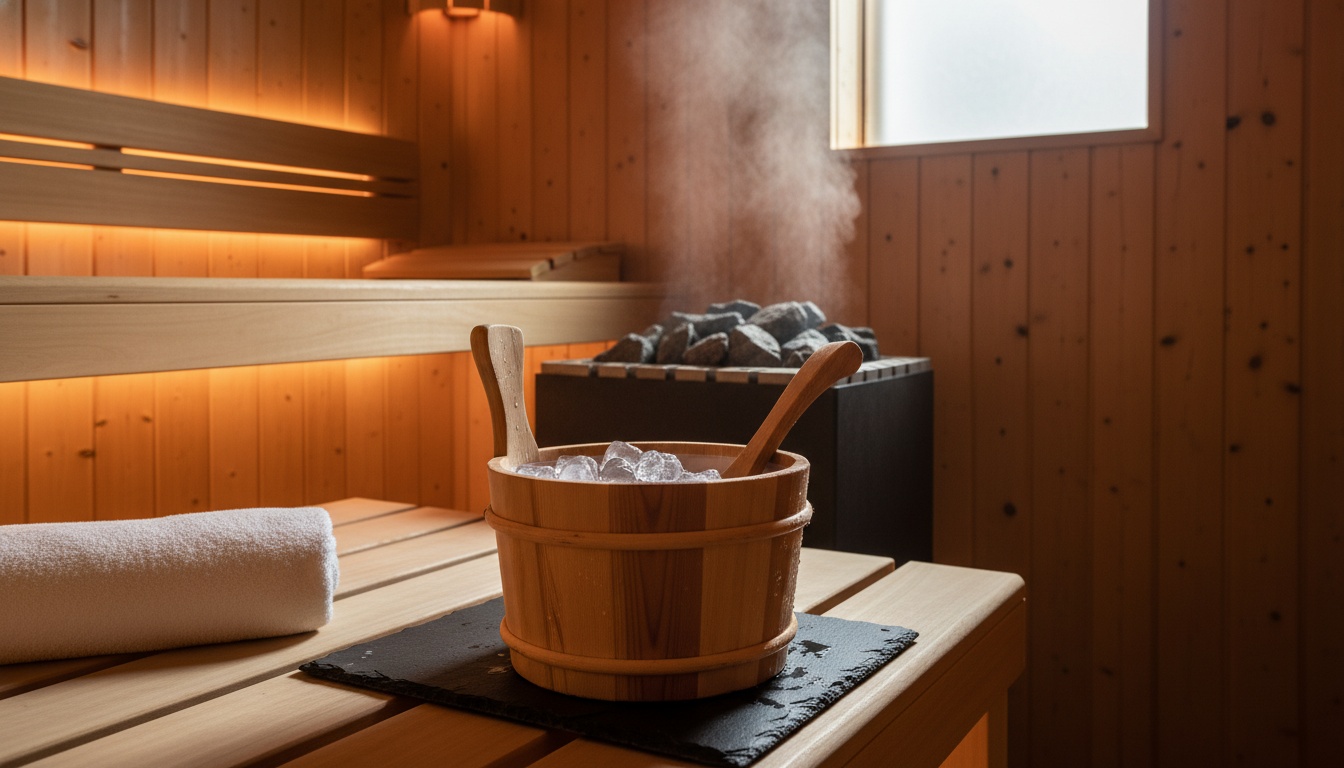
Regular Finnish sauna bathing (80–100°C, 15–20 minutes, two to three times per week) is associated with reduced cardiovascular mortality. A narrative review by Nagai et al. found improvements in blood pressure, arterial stiffness, and endothelial function. Finnish cohort studies tracking participants for over 20 years back this up.
The mechanism: your core temperature rises, which triggers heat shock proteins (HSPs). These are cellular repair systems that fix damaged proteins and protect cells from stress. A 2024 paper in Cell Stress and Chaperones showed that restoring the heat shock response resolved inflammation in chronic disease models (Schroeder et al.). Sauna also increases growth hormone release by 200–300% during repeated sessions, which supports muscle repair, fat metabolism, and collagen production.
Two sauna types dominate the research:
- Finnish sauna (80–100°C, dry heat, 15–20 min) — most evidence, strongest cardiovascular data
- Infrared sauna (50–60°C, 30–45 min) — moderate evidence, more accessible, lower temperature tolerance
Steam rooms are less studied but produce a similar heat stress response. If you don’t have access to a traditional sauna, infrared is a reasonable alternative.
Which breathwork technique actually works?
Breathwork isn’t one thing. The Wim Hof method and box breathing do almost opposite things.
Wim Hof method (controlled hyperventilation followed by breath holds) activates the sympathetic nervous system. It spikes adrenaline and norepinephrine, temporarily suppresses immune response, and can reduce inflammatory markers in trained individuals. Small studies show promise, but large-scale trials are limited. Don’t do it before bed — it’s activating, not calming.
Box breathing (inhale 4 seconds, hold 4, exhale 4, hold 4) does the reverse. It activates the parasympathetic nervous system, lowers cortisol, and improves heart rate variability. The evidence here is consistent and well-replicated. It’s what Navy SEALs use to stay functional under pressure.
Diaphragmatic breathing has steady evidence for anxiety reduction. It’s the simplest option — sit down, breathe into your belly for five minutes.
For stress management, box breathing or diaphragmatic breathing wins. For performance or immune modulation, Wim Hof is interesting but still needs more research.
How should I combine cold exposure, sauna, and breathwork?
If you want all three, build in slowly. Add one modality per week.
A workable weekly schedule:
- Monday / Wednesday / Friday: Finnish sauna, 80–90°C, 15–20 minutes
- Tuesday / Thursday: Cold water immersion, 10–15°C, 2–3 minutes
- Daily: Box breathing, 5 minutes in the morning or evening
What to skip: Extreme cold exposure (below 5°C) before you’ve built tolerance. Sauna sessions longer than 20 minutes without experience. Wim Hof if you have anxiety or panic disorder — it can trigger episodes.
The Finnish sauna model has over 20 years of cohort data. Cold water immersion has strong trials for inflammation and norepinephrine. Breathwork is reliable for stress management. None of them require expensive equipment or a biohacking subscription.
Don’t do them because someone on Instagram does them. Do them because the biology holds up.
This post contains affiliate links. If you purchase through these links, I may earn a small commission at no extra cost to you.
References
van Marken Lichtenbelt WD, et al. Cold-activated brown adipose tissue in healthy men. N Engl J Med. 2009;360(15):1500-1508. https://pubmed.ncbi.nlm.nih.gov/19357406/
de Freitas VH, et al. Effect of Cold Water Immersion Performed on Successive Days on Physical Performance, Muscle Damage, and Inflammatory, Hormonal, and Oxidative Stress Markers in Volleyball Players. J Strength Cond Res. 2019;33(2):502-511. https://pubmed.ncbi.nlm.nih.gov/28277426/
Schroeder HT, et al. Resolution of inflammation in chronic disease via restoration of the heat shock response (HSR). Cell Stress Chaperones. 2024;29(1):1-10. https://pubmed.ncbi.nlm.nih.gov/38309688/
Nagai M, et al. Effects of Bathtub Bathing and Sauna Practices on Cardiovascular and Systemic Health: A Narrative Review. Int J Environ Res Public Health. 2026. https://pubmed.ncbi.nlm.nih.gov/41899724/
Coming soon
- The supplement stack that actually helps with perimenopause
- Why your iron levels matter more than you think
- Retatrutide: The next weight loss peptide everyone is waiting for