
Butyrate, Probiotics & Your Brain: The Gut-Mood Connection
Your gut bacteria produce a compound called butyrate that directly affects brain chemistry. Here is how it works and what you can eat to boost it.
Your gut bacteria produce a compound called butyrate that directly affects brain chemistry. Here is how it works and what you can eat to boost it.

BDNF is the protein that determines whether your brain bounces back or stays stuck. Your gut bacteria control how much you make.

Your gut bacteria produce a compound that literally changes which genes your brain expresses — and it may be the missing piece in understanding depression.
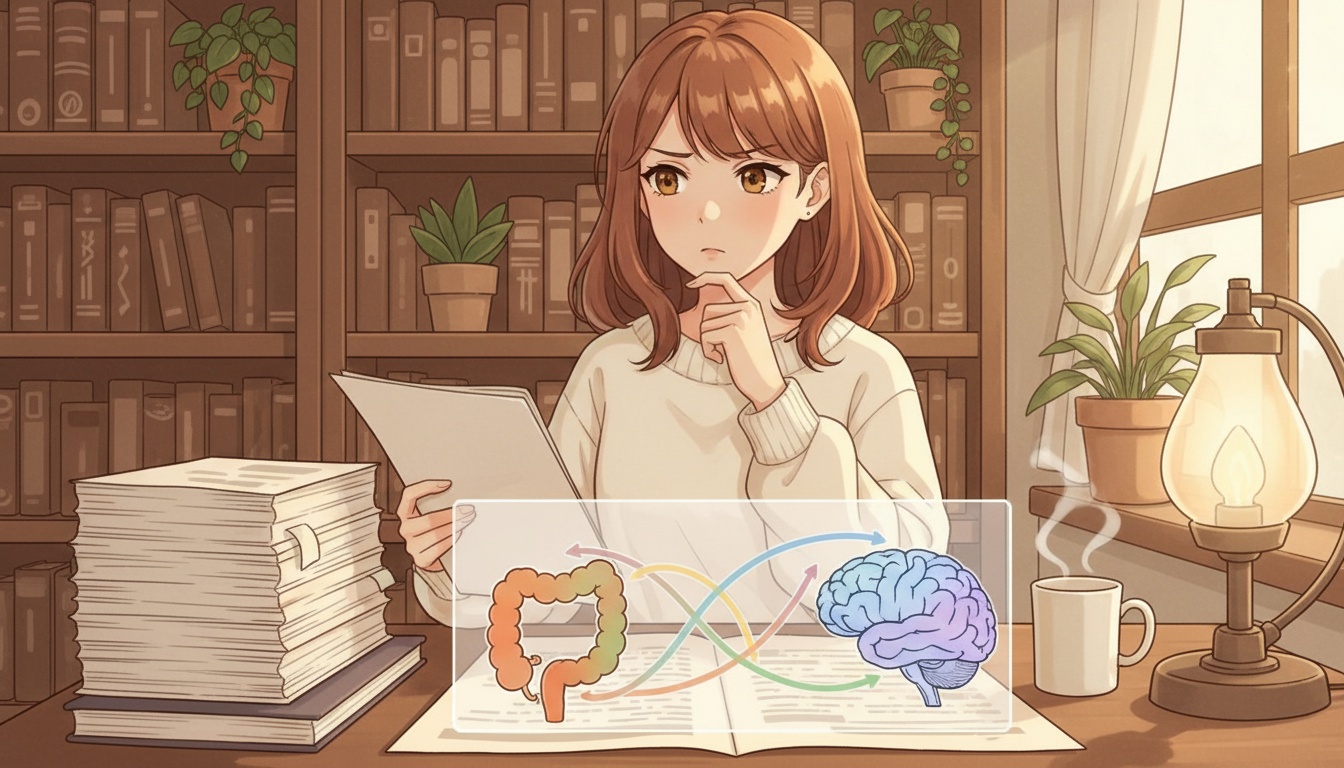
Three pathways connect your gut bacteria to your brain. Understanding the system — not just one piece — is what actually changes your mental health.

SSRIs don’t work for half of depressed patients. The reason might start in your gut, not your brain.

A research-backed week-by-week timeline for gut healing interventions so you know what to expect and when to worry.

Your body needs tryptophan to make serotonin. But when your gut is inflamed, that tryptophan gets stolen — and the byproducts are worse than low mood.

New research challenges the chemical imbalance theory of depression. The real culprit might be chronic inflammation originating in your gut.

The specific probiotic strains with real clinical evidence for improving mood — and the ones that don’t cross the gut-brain barrier.

The immune-cytokine model of depression shows how gut inflammation sends chemical signals to your brain — and what you can do to interrupt the cycle.

The gut-brain axis isn’t a wellness trend — it’s a measurable biological pathway. Here’s what the latest studies show.

Your gut bacteria manufacture most of your body’s serotonin. Here’s how that connection works and what you can do about it.
Get new posts in your inbox
No spam. No sales pitches. Just the science.
By subscribing, you agree to receive email updates. Unsubscribe anytime. Privacy
Like what you're reading?
Get new posts delivered. No spam, just the science.
By subscribing, you agree to receive email updates. Unsubscribe anytime.