
Antibiotics and Your Mood: How Long Recovery Really Takes
After antibiotics, your gut takes weeks to recover — and your mood pays the price. Here’s what’s happening and how to speed it up.
After antibiotics, your gut takes weeks to recover — and your mood pays the price. Here’s what’s happening and how to speed it up.

A spore-forming probiotic strain with real clinical trials showing improvements in depression, anxiety, and gut inflammation.

The gut-brain connection is real, but what actually works? Evidence-based probiotics, butyrate, diet, and testing strategies for mental health.

Your gut bacteria make a compound called butyrate that crosses into your brain, reduces inflammation, and may be the missing piece in treating depression.

The gut-brain connection is more specific than you think — new research maps the exact pathways your gut bacteria use to influence your mental health.

Your gut bacteria produce a compound called butyrate that directly affects brain chemistry. Here is how it works and what you can eat to boost it.

A research-backed week-by-week timeline for gut healing interventions so you know what to expect and when to worry.

The specific probiotic strains with real clinical evidence for improving mood — and the ones that don’t cross the gut-brain barrier.

Your microbiome doesn’t just digest food — it manufactures neurotransmitters and sends signals directly to your brain through the vagus nerve.

Your probiotic might be working — or it might be expensive filler. Here’s how to tell the difference.
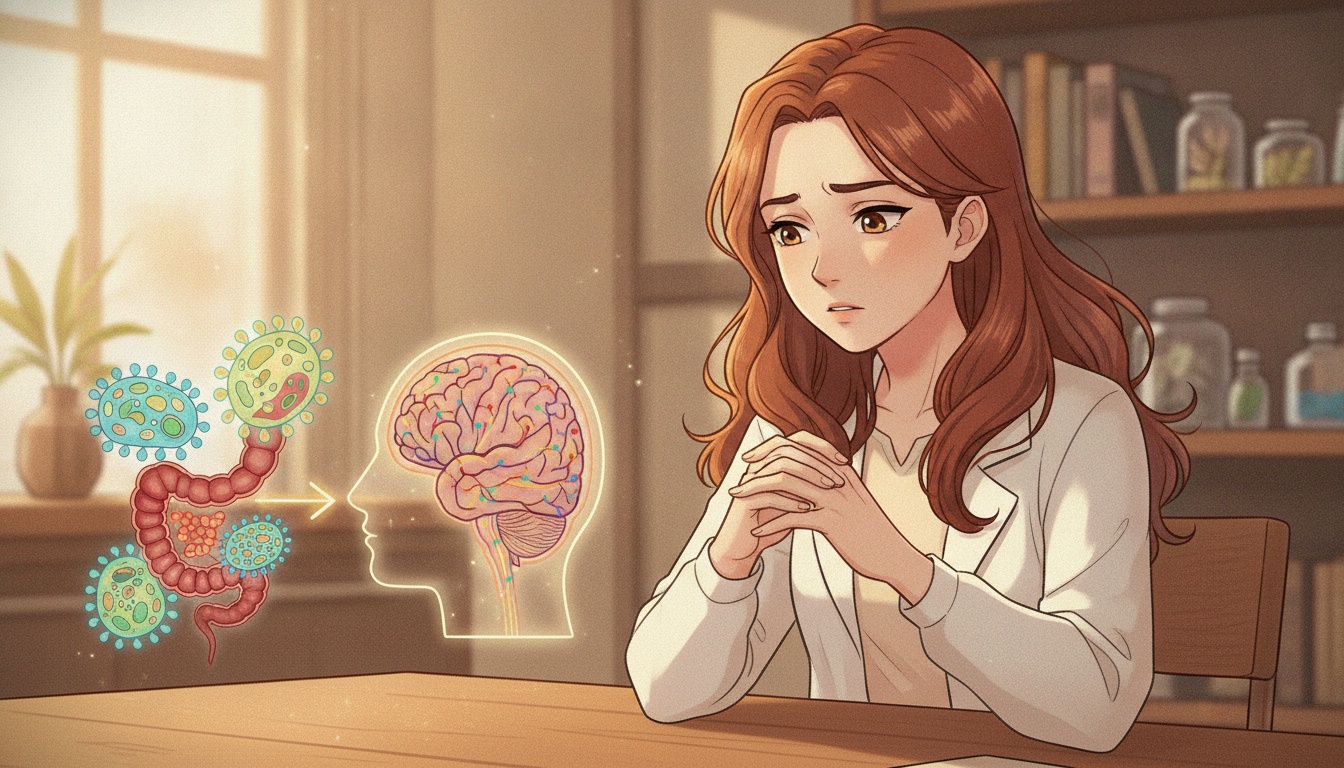
The gut-brain axis isn’t a theory anymore — it’s a mechanism. Here’s how your microbiome controls your mood and what to do about it.

Your gut bacteria produce neurotransmitters, regulate inflammation, and talk to your brain in real time. After 40, that conversation changes.
Get new posts in your inbox
No spam. No sales pitches. Just the science.
By subscribing, you agree to receive email updates. Unsubscribe anytime. Privacy
Like what you're reading?
Get new posts delivered. No spam, just the science.
By subscribing, you agree to receive email updates. Unsubscribe anytime.